|
|
|
TILE DOCTOR ® Terracotta Tile Restoration. |
|
|
|
|
Terracotta Tiles - Cleaning and Sealing
|
GeneralTerracotta Tiles have been around in certain parts of the world for over two millennia, in fact the word Terracotta means burned earth. The ancient Romans used a variety of terracotta tiles in their villas and palaces for many centuries. Terracotta tiles are thicker than most modern tiles giving them strength and durability.
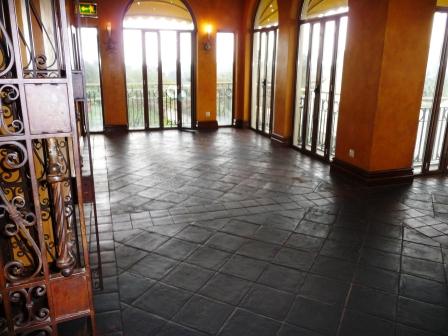
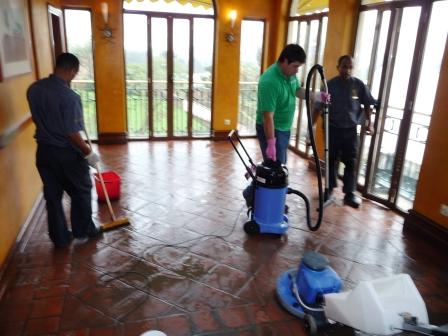
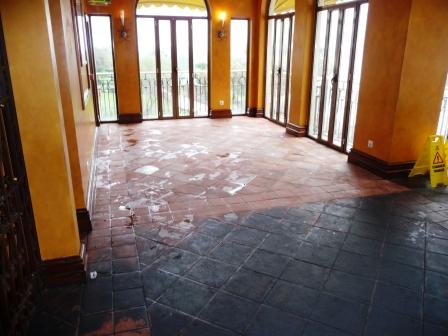
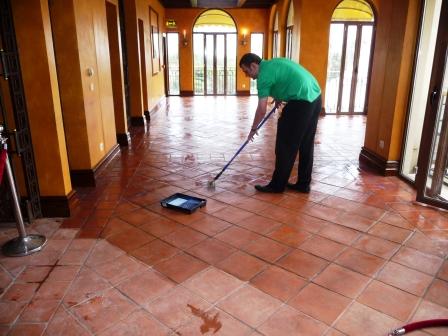
The photographs at the top of this page and to the right of this text were taken from a job we did at a Restaurant. The tiles were ingrainded with black dirt and proved most difficult to clean, normally we only recommend 9 coats of sealer for Terracotta but used 12 coats for this floor due to the high traffic. |
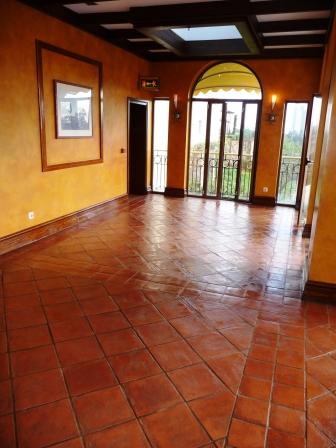
After Cleaning and Sealing
|
Terracotta Tile Maintenance
The one big downside to Terracotta is the fact that it has no glaze on the surface and can pick up and store muck and dirt very quickly. If you have ever owned a Terracotta floor before you will be able to relate to this problem.
The answer of course is to seal them, but which sealants do you use as there are so many of them on the market, the best answer is to get some advice and as any tiler worth his salt will tell you Terracotta tiles are the most problematic to seal . Wax sealants tend not to soak all the way into the tile and some residue is left on the surface which overtime with traffic wear, tends to discolour to a darker shade whilst leaving the outside edges clean where they are not walked on that much.
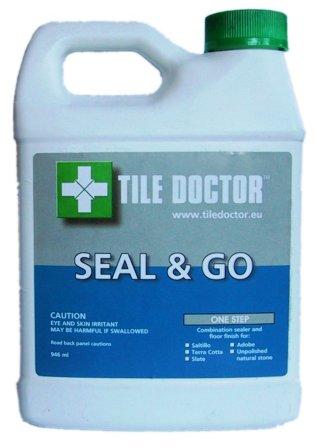
The best sealant I have found to overcome this problem are water-based sealers. Water based sealers are much thinner than solvent or acrylic sealers and therefore soak much deeper into the tile. The only drawback if there is one is the fact that you require many coats of sealant before saturation is achieved, Whilst doing a clean and reseal on a Mexican Terracotta floor, which tends to be the most porous of all terra-cottas, on one installation we had to use 9 coats of Seal & Go sealer before it was fully sealed.
Use Tile Doctor Pro-Clean Tile & Grout cleaner to effectively clean tiles, highly effective against Wax Sealers, Grease, Grime and general dirt build up (Mix with 3 parts warm water). This product is especially formulated to strip off synthetic and acrylic waxes and floor finishes.
PLEASE NOTE: It's important to remove any cleaning solution effectively using a wet-dry Vac machine before sealing; any cleaning solution left on the surface may impact the performance of the sealer.
|
|
MEXICAN/SPANISH
Always neutralise floor with clean water prior to sealing and remove with a wet-dry
Vac machine, allow to dry for 30 minutes or more. Apply Tile Doctor Seal & Go sealer with a paintpad applicator and tray. Spanish or Mexican terracotta tiles may require up to 8 or 9 coats of sealant, always allow to dry before applying the next coat. Use a water test to achieve full cure sealability (F.C.S.).
|
FRENCH
Always neutralise floor with clean water prior to sealing, and remove with a wet-dry
Vac machine, allow to dry for 30 minutes or more. Apply Tile Doctor Seal & Go sealer with a paintpad applicator and tray. French terracotta tiles may require up to 6 or 8 coats of sealant, always allow to dry before applying the next coat. Use a water test to achieve full cure sealability (F.C.S.).
|
TIP: If the floor goes sticky after the last coat of sealer it generally means to much sealer has been used and a rinse of Tile Doctor Pro-Clean tile and grout cleaner on the affected areas using 1 to 6 part solution will remedy the problem without affecting the rest of the sealer as long as you rinse it off with water afterwards.
NOTE: Most sealers break down after 2-3 years (depending on usage and cleaning products used) so for regular cleaning use a sealer friendly cleaning product such as Neutral Tile Cleaner which has been especially formulated for the regular cleaning of Sealed Stone and Tile surfaces keeping them fresh with a pleasant mint scent.
|
|
|
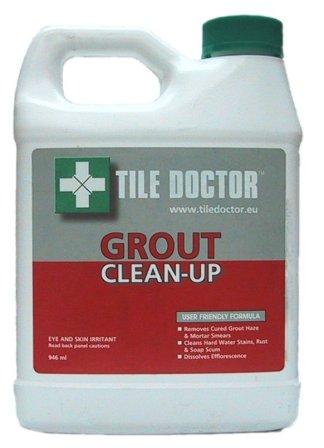
Effloresence problems usually occur when salts are in contact with the tile from an outside source. This is most evident in porous tiles where the effloresence can seap through. For example we have come across a number of jobs where the contractor has used a sand and cement mix with terracotta tiles and over a short period of time the salts that are evident in the sand and cement crystalize into the tile and a whiteish bloom develops on the surface of the tile often cracking the sealer. If a cement based adhesive was used from a reputable tile shop this problem would never have occured.
|
|
A solution of Concentrated Acid mixed 1 to 3 with water will ease the problem temporarily, but you will find in most cases the effloresence will repeat itself until all the salt crystals have evaporated on the surface, and this can take months in some instances.
|
|
|
|
Terracotta Problem?
Click here to Ask the Tile Doctor for his advice.
|
| Name |
Question |
|
Michael
Preston |
After putting salt granules into the dishwasher one or two granules fell onto the terracotta floor tiles and were unwittingly trodden. We now have two tiles by the dishwasher which are badly stained/bleached and spots along the floor where remnants have been trodden in. Is there a cure?. |
| Tile Doctor |
The dishwaher stains have probably damaged the sealer, but not the tile as the sealer protects the tile. If you know which sealer has been used, then reaply a coat or two, clean the stain with Pro-Clean Tile And Grout Cleaner available from our website, if your not sure which sealer was used then we have one called Seal and Go, although it might not be compatible and give you a 100% perfect finish it will still look better than stain spots. |
|
Peter
Chester |
I have a terracotta tiled kitchen floor - waxed. I recently had a small flood and water got under some of the tiles. the affected tiles are now showing white patches! What can I do? |
| Tile Doctor |
The white patches are mineral salts (also known as effloresence) they will disapear in time, but you could try a couple of coats of sealer which will get rid of most of it. We have a sealer called Seal and Go which is excellent on Terra-cotta.
|
|
For more Tile Doctor advice see the Ask the Tile Doctor web page.
|
|
|

|